
HomeCrane rental
Crane Rental Toronto
Toronto lifts need a crane that fits the street, the permit, and the power lines. Oxford Crane plans the lift around all three.
Request Your Ontario Crane Rental Quote
Add your site address, the load and the pick height so we can plan the right crane.
Rather talk it through? (226) 400-2111
In short
Crane rental Toronto starts with the site, not the truck.
A lift over a Toronto street or sidewalk needs a Street Occupation Permit, and a tower crane swing needs Transport Canada and Nav Canada approval. Oxford Crane checks the radius, the ground, and the wires before the crane is booked.
Permits and street rules
Permits and Street Rules in Toronto
A Street Occupation Permit is required before a mobile crane or boom truck occupies a boulevard, sidewalk, roadway, or public lane. Tower crane swings and flying of forms also require the permit.
A tower crane swing application must include metric drawings showing the radius of swing and the base, plus cross sections with foundation and counterweight details stamped by a Professional Engineer in Ontario. Written approval from Transport Canada, Civil Aviation Services Ontario, and Nav Canada's AIS Data Collection Unit and Land Use Office is required.
Processing takes approximately 12 weeks after all information is submitted. Swinging over a City sidewalk may require an additional site protection permit. Application drawings must show all physical details, including sidewalk, trees, utility and hydro poles, fire hydrants, parking meters, and street furniture.
Published by the City of Toronto
Approval of a tower crane swing of boom application requires a certificate of insurance for $2 million with the City of Toronto identified as an additional insured and containing a cross-liability clause.
Outside a Construction Hub, the tower crane swing of boom hoisting permit fee is $73.89 plus HST per day, with an additional lane fee of $178.81 plus HST per day and a full closure fee of $894.03 plus HST per day.
Check the source for current amounts.
Site limits
Site Limits for a Lift in Toronto
Ontario's Construction Projects Regulation requires people and equipment to keep a minimum distance of 3 metres from high voltage powerlines between 750 volts and 150,000 volts. All lines must be treated as high voltage until Toronto Hydro identifies the voltage. A signal person must assist the operator whenever a crane is near overhead power lines.
Toronto Hydro does not require line covers because covered lines do not protect against contact hazards. Before starting, the job should be reviewed with contractors to point out the location of all overhead and underground powerlines within or near the work area.
If contact occurs, remain in or on the equipment because stepping out creates a path to the ground that could be fatal.
Where we lift
Serving Toronto and nearby
Toronto's permit and hydro rules decide the crane, the schedule, and the setup.
Lift types
Lift Types in Toronto
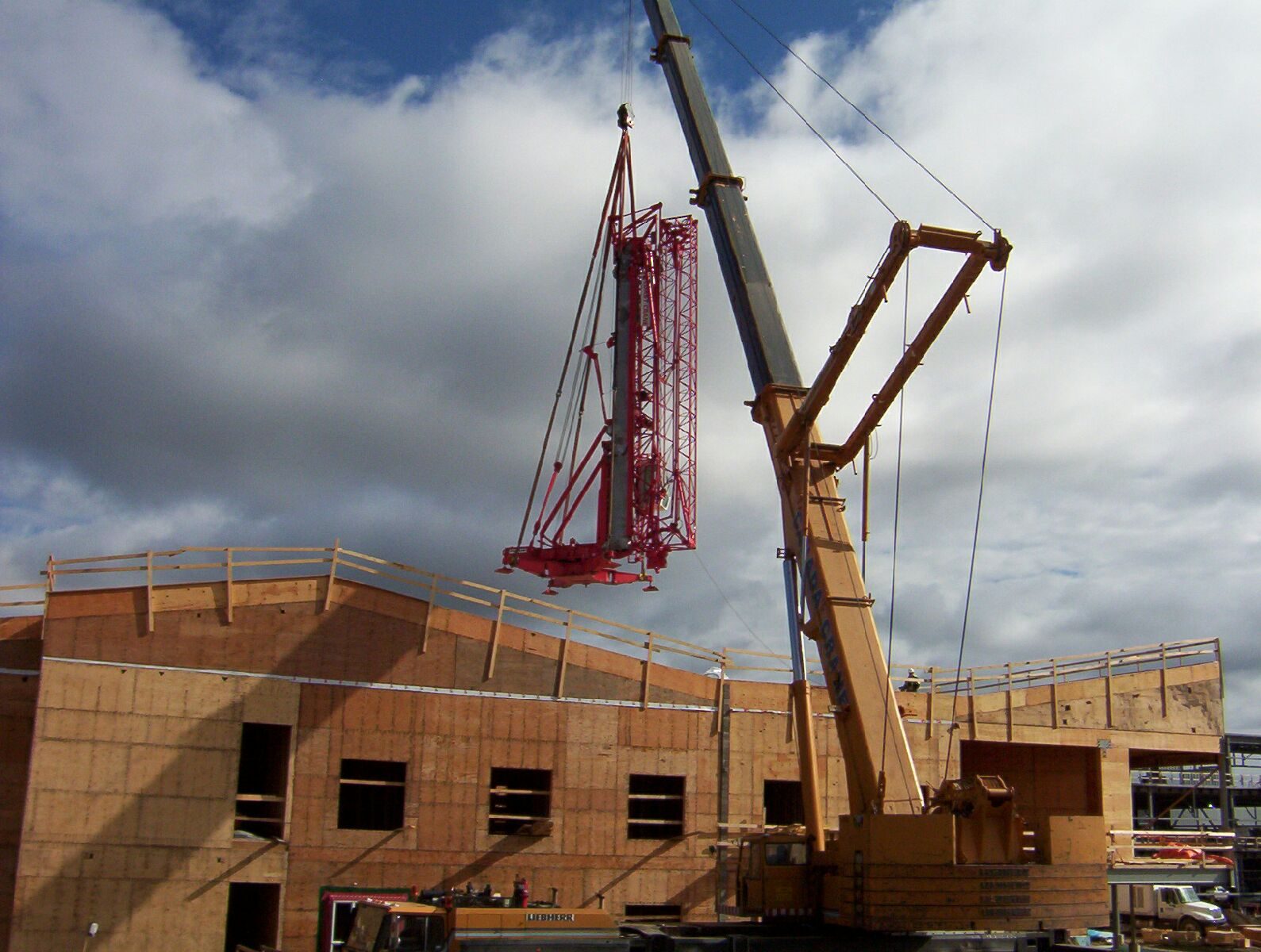
Toronto jobs typically use a mobile crane for a rooftop unit set over a street-side building, a boom truck for a shorter reach with a tight lane, or a tower crane for a long-duration high-rise project.
A typical rooftop unit lift starts with a street closure permit, then the crane is set on mats, the unit is hoisted over the building edge, and the signaller guides it onto the roof curb. A typical precast or steel lift uses a larger mobile crane with a longer radius, and the swing path is checked against the permit drawings.
Which machine
Picking the right crane for a Toronto lift
What shapes a quote
What decides the price of a Toronto lift
- Radius
- Time on site
- Extra moves
- Night or weekend window
- City lane closure permit
How a lift is planned
From Call to Lift in Toronto
The order of a Toronto lift follows the permit and the site. Each step is confirmed before the crane moves.
Permit and approvals
If the crane or the load crosses a public lane, the Street Occupation Permit is applied for. A tower crane swing needs Transport Canada and Nav Canada approval, and processing takes approximately 12 weeks.
Ground and wires
Soft or frozen ground needs mats.
Set-up
The crane is set on mats, and the outriggers are placed clear of vaults and soft spots.
Removal
The crane is dismantled and the lane is reopened after the permit conditions are met.
Common mistakes
Common Mistakes on a Lift in Toronto
Toronto's permit and hydro rules turn small oversights into stopped work. These mistakes cost time and money on a city lift.
- Setting up under a hydro line because the street looked open The 3-metre minimum distance is missed, and the job stops.
- Closing a lane on the day of the lift without the city's road-occupancy permission The lift is shut down and the permit is delayed.
Do I need a permit for a crane rental in Toronto?
Yes. A Street Occupation Permit is required before a mobile crane or boom truck occupies a boulevard, sidewalk, roadway, or public lane. Tower crane swings and flying of forms also require the permit. A tower crane swing application needs drawings stamped by a Professional Engineer and written approval from Transport Canada and Nav Canada. Processing takes approximately 12 weeks.
Will the crane fit my Toronto site?
The load, the radius, and the path to the set-up decide the crane. Ontario requires a minimum distance of 3 metres from high voltage powerlines between 750 volts and 150,000 volts.
What happens if the crane contacts a powerline in Toronto?
Remain in or on the equipment. Stepping out or off creates a path to the ground that could be fatal. Toronto Hydro can be called to have overhead powerlines isolated, relocated, or removed for work near them, and there is a fee for these services.
Call Oxford Crane for a crane rental Toronto lift that fits the street, the permit, and
the power lines.
Share the load, the height and the site access, and we will come back with the crane that fits.